
Empathy, anti-empathy, and what we owe each other (Issue #417)

The word “empathy” is, in one sense, surprisingly modern. The use of the term to describe understanding another’s point of view only came about after World War II, but that’s a recent usage for an idea that goes back to ancient Greece.
“Homer gives us resources for thinking about what we now call empathy,” writes Ancient Greek and Roman Studies professor Maximus Planudes, “even if the translation isn’t exact.”
Planudes is writing in reaction to what’s known as the anti-empathy movement. Boosted by online figures like Elon Musk and the late Charlie Kirk, anti-empathy refutes the idea that we owe unconditional compassion to everyone, warning against weaponized “toxic empathy” coming from outsiders; instead, it preaches “anchored compassion” rooted in theology or ideology.
This week, let’s look at the long, historical record of empathy, compassion for others, and the important role community plays in understanding what we owe each other.
Compassion in the Classics
To understand what’s actually at stake in the empathy/anti-empathy debate, it helps to look at where the concept — if not the literal word — actually comes from.
In The Anti-Empathy Movement & the End of the Iliad, Ancient Greek and Roman Studies professor Maximus Planudes argues against the idea that empathy is, as Kirk once said, “a made-up, new age term.” The actual concept of compassion for others has deep, classical roots:
When I teach Book 24 of the Iliad, I do not use the word “empathy,” even if students in discussion tend to… What Achilles experiences with Priam might be better understood through Homeric concepts: ἔλεος (pity), αἰδώς (shame/respect), and recognition of ξενία (guest-friendship).
He goes on to examine the anti-empathy movement in greater detail, drawing a direct line between the theologic papers from the 1990s to today’s internet-driven movement.
The purpose of anti-empathy, Planudes argues, is to protect in-groups from out-groups who are not worthy of care — an ahistorical concept, even dating back to ancient history.
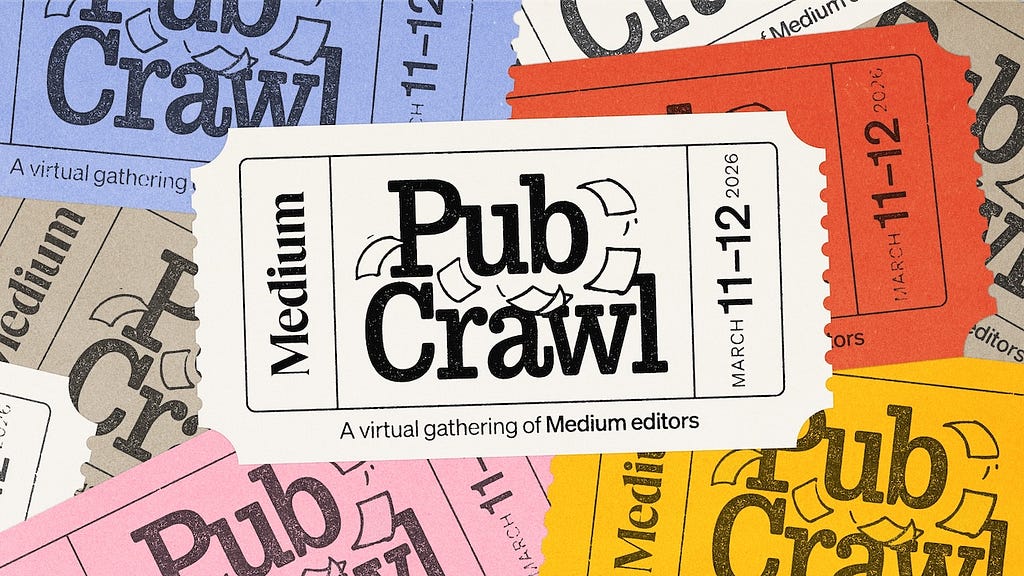
Join these virtual workshops to learn, hang out with your fellow writers and editors, and meet with the different publications that publish on Medium.
“Closing the heart loses empathy slowly, you feel less, care less, connect less. Gift dims. Open? Hurts more short term, but heals real. You feel others again, joy shared, pain understood gentle. World richer, warmer.”
—George Clausen, What Happens When an Empath Closes Their Heart
Helping, Honestly
Empathy shows up in interpersonal dynamics, too, often in the form of connection.
In When Being Right Costs You the Relationship: Rethinking Feedback, Malynnda Stewart, PhD, BCPA reflects on some of the anti-empathetic conversations she’s had in the past. Sometimes cloaked as “radical honesty” or “telling it like it is,” this kind of harshness more often severs bonds and creates defensive barriers than helps. As she writes, “I chose right over connected. Repeatedly. Until there was nothing left to be right about.”
Instead, she suggests reframing it as a way to stay connected to the relationship. “Not: you need to change,” Stewart writes, “But: here’s what I’m experiencing, and I want to share it with you because this relationship matters to me.”
“Sometimes other people really are the worst, and understanding them requires understanding their agency, not what is good about them.”
—Mark Schroeder, I’m a philosopher who tries to see the best in others — but I know there are limits
Great Communities of History
Malynnda Stewart’s insight above—that staying connected matters more than being right — turns out to hold at every scale of human achievement. No man is an island; even geniuses work with the support of others.
Ethan Siegel’s Einstein the “lone genius” is a complete myth artfully punctures the idea of the “great men of history.” It looks at Einstein’s mythic “miracle year” — 1905, the single year in which he produced many of his most famous theorems, including the famous equation E=mc2 — in context.
Einstein’s first wife, Mileva Marić, made countless contributions to his research; he had a study group with several contemporaries; even his famous patent office job was given to him as a favor to a friend’s father.
And although Einstein was a world-class talent, much of his work was built on the foundation of the lesser-known scientists around him. “In fact, if he hadn’t listened to input from the world-class minds around him,” Siegel writes, “Einstein wouldn’t have had anywhere near the successes or the impact that he did.”
“Volunteers turned up in doves to canvas for petition signatures. They patrolled sidewalks, ventured into traditional wet markets, held signs at posh shopping districts, and devoted their free time and weekends to this grassroots initiative.”
—Min Chao, Taiwan Democracy: Documenting the 2025 Great Recall
What do you think we owe each other?
Should we be empathetic, or should we be compassionate while anchored in our beliefs? And what have you read recently that’s deepened your understanding of empathy? Respond to this on Medium and let us know.
More empathy highlights from across Medium:
“Empathy reduces friction.”
—Hasanthi Purnima Dissanayake, Empathy in Software Engineering
“Instant perspective shift. Instead of frustration, there was understanding. Instead of reaction, there was restraint. Instead of ego, there was empathy.”
—Aswand Cruickshank, Valentine’s Day, Situationships, and “The Bus,” That Taught Me Empathy
“Empathy never rushes to give reasons as to why something has happened.”
“[‘Do Androids Dream of Electric Sheep’] is a haunting premise: a world where the organic is a luxury, and empathy is a dial on a keypad.”
—Yalcin Arsan, The Empathy Dial: Why Rick Deckard’s Electric Sheep is More Human Than You Think
Deepen your understanding every Friday with the Medium Newsletter. Sign up here.
Edited and produced by Scott Lamb & Carly Rose Gillis
Like what you see in this newsletter but not already a Medium member? Read without limits or ads, fund great writers, and join a community that believes in human storytelling.
Empathy is a recent term for an ancient concept was originally published in The Medium Blog on Medium, where people are continuing the conversation by highlighting and responding to this story.